

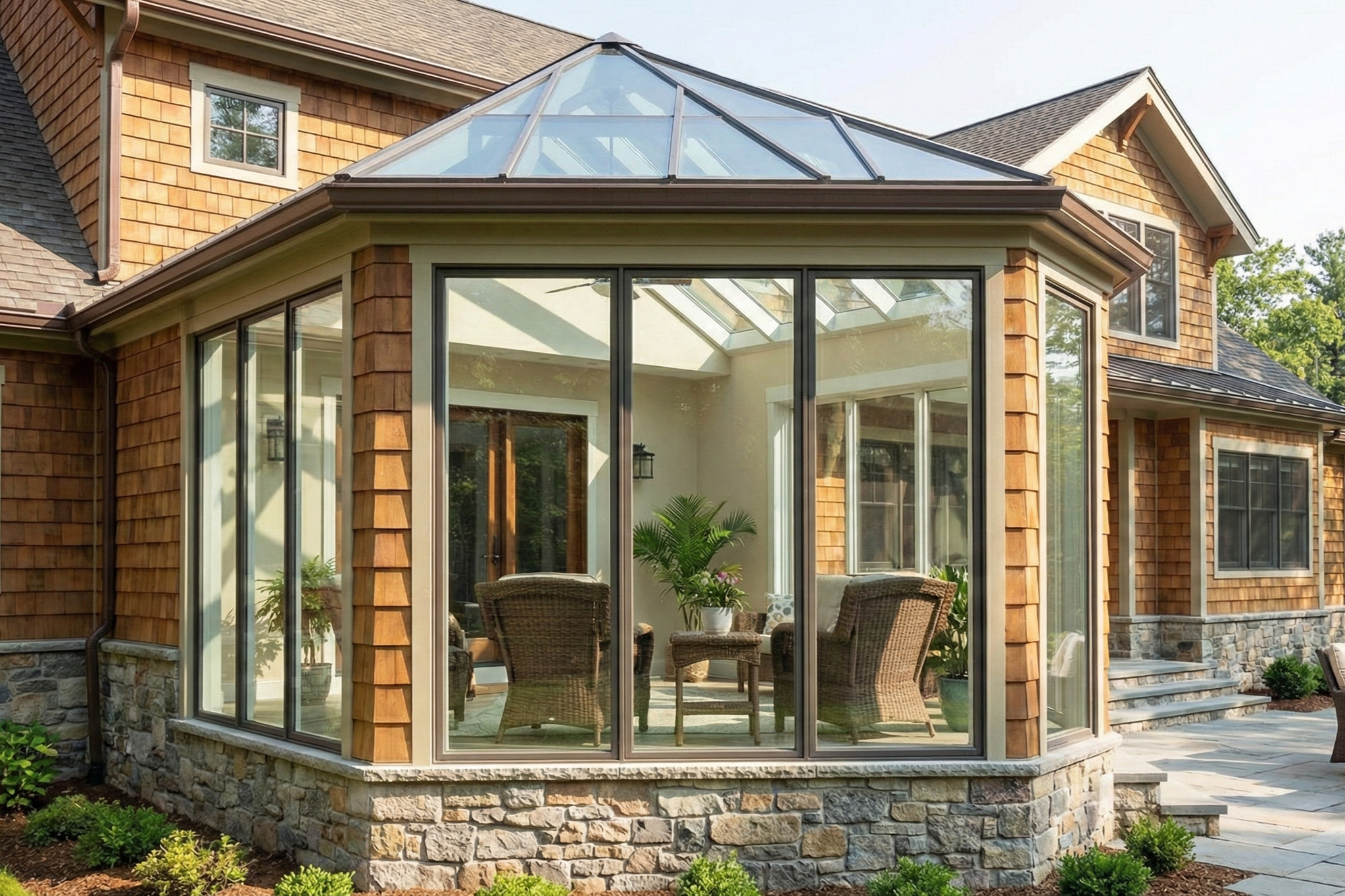
Homeowners across Weddington, Waxhaw, Marvin, Indian Trail, Monroe, Wesley Chapel, Matthews, Mint Hill, Charlotte, and the surrounding Union County area are investing more into outdoor living spaces. The question is usually not, “Do we want more usable space?” The real question is: Should we build a screened porch, sunroom, 3-season room, or 4-season room?
Each option gives you a different level of comfort, cost, insulation, resale impact, permit complexity, and year-round usability. A screened porch may be perfect if you want fresh air without bugs. A 4-season room may make more sense if you want finished living space that feels like part of the house. A 3-season room sits somewhere in the middle.
At Viro Builders, we help homeowners compare these options clearly before they commit to design, permitting, and construction.
Quick Answer: What Is the Difference?
| Option | Best For | Comfort Level | Typical Use | Cost Level |
|---|---|---|---|---|
| Screened Porch | Outdoor living without bugs | Good in mild weather | Spring, summer, fall | $ |
| Sunroom | More natural light and enclosed space | Depends on design | Seasonal or year-round | $$ to $$$ |
| 3-Season Room | Enclosed space without full HVAC integration | Better than a screened porch, not full interior space | Spring, summer, fall | $$ |
| 4-Season Room | Fully finished year-round living area | Highest | All year | $$$$ |
A sunroom is a broad term. It can be designed as a 3-season room, a 4-season room, or a custom glass-heavy addition. The important part is not the name. The important part is whether the room is conditioned, insulated, code-compliant, and designed for year-round use.
The North Carolina Office of State Fire Marshal describes a sunroom generally as a one-story structure attached to a dwelling with glazing over 40% of the gross area of the exterior walls and roof. It also notes that unconditioned sunrooms are treated differently than rooms intended for full human comfort throughout the year. Source: NC OSFM Heating Requirements for Sunrooms.
Option 1: Screened Porch
A screened porch is usually the most cost-effective way to create outdoor living space. It gives you shade, airflow, protection from bugs, and a comfortable place to relax without fully enclosing the room with glass, insulation, and HVAC.
For homeowners in Weddington, Waxhaw, Marvin, and the Charlotte area, screened porches are popular because they work well with our climate. You still feel connected to the backyard, but you get protection from mosquitoes, leaves, and direct sun.
A Screened Porch Usually Includes:
Framed porch structure
Roof system or roof tie-in
Screen openings
Decking, concrete, or finished porch flooring
Ceiling finish
Lighting and fan wiring if included
Trim, paint, gutters, and exterior finish details
Best For:
Backyard entertaining
Morning coffee
Outdoor dining
Watching kids in the yard
Homeowners who want airflow, not air conditioning
Cost Planning Range for a Screened Porch
For Charlotte-area pricing, Angi reports that new screened-in porches in Charlotte can range from about $25 to $120 per square foot, while screening an existing porch enclosure may cost less depending on the existing structure. Source: Angi Charlotte Screened Porch Cost Guide.
| Screened Porch Scope | Planning Range |
|---|---|
| Screen an Existing Covered Porch | Lower cost, depending on the existing framing, roof, floor system, and screen layout |
| New Basic Screened Porch | $25 to $120 per sq. ft. as a general planning reference |
| Custom Roof-Tied Screened Porch | Often higher depending on roof tie-in, foundation, finishes, electrical, and exterior matching |
| Screen Replacement or Rescreening | Varies based on screen type, size, access, and condition of existing framing |
Contractor note: The biggest price drivers are the roof tie-in, foundation, framing, ceiling finish, flooring, electrical, screen type, and whether the porch needs to match the existing home exterior.
Option 2: Sunroom
A sunroom is an enclosed room designed to bring in natural light. It usually has a high percentage of windows, glass panels, or glazed openings. Some sunrooms are simple seasonal spaces, while others are built almost like a full home addition.
The word “sunroom” can be confusing because homeowners use it to describe several different types of rooms. A sunroom can be:
A basic enclosed porch
A 3-season room
A 4-season room
A glass-heavy home addition
A prefabricated sunroom system
A custom stick-built addition with large windows
According to HomeGuide, sunrooms can range from about $100 to $350 per square foot on average, with 3-season and 4-season rooms falling into different pricing categories based on insulation, HVAC, foundation, materials, and finishes. Source: HomeGuide Sunroom Cost Guide.
Best For:
Homeowners who want more natural light
Sitting areas
Plant rooms
Breakfast rooms
Backyard views
Transitional indoor-outdoor space
Important Design Question:
Before pricing a sunroom, the first question should be:
Do you want a seasonal room, or do you want true year-round living space?
That answer changes the budget, design, permit path, insulation requirements, HVAC planning, and inspection scope.
Option 3: 3-Season Room
A 3-season room is more enclosed than a screened porch, but it is usually not built to the same level as a fully conditioned interior room. It may include windows, sliding panels, vinyl window systems, screens, finished flooring, electrical, and a more protected envelope than a screened porch.
A 3-season room is typically designed for spring, summer, and fall. It may be usable during mild winter days in North Carolina, but it is generally not designed to perform like a fully heated and cooled room.
A 3-Season Room Usually Includes:
More enclosure than a screened porch
Window or panel systems
Protection from wind and rain
Optional electrical
Finished ceiling and flooring
Limited insulation depending on design
Usually no fully integrated HVAC system
Best For:
Homeowners who want more comfort than a screened porch
Extended seasonal use
Flexible entertaining space
Budget-conscious enclosed outdoor living
Projects where full conditioned living space is not necessary
Cost Planning Range for a 3-Season Room
HomeGuide reports that 3-season rooms can range from about $8,000 to $50,000 overall, or about $80 to $230 per square foot for many custom 3-season room additions, depending on size, foundation, and finish level. Source: HomeGuide Sunroom Cost Guide.
| 3-Season Room Scope | Planning Range |
|---|---|
| Basic Enclosure Over Existing Structure | Lower cost if the existing porch, slab, roof, and framing are suitable for enclosure |
| Custom 3-Season Room | $80 to $230 per sq. ft. as a general planning reference |
| Higher-End 3-Season Room | Can increase with upgraded windows, roof tie-ins, electrical, flooring, trim, and exterior finish matching |
Contractor note: Many homeowners think converting a screened porch into a 3-season room is simple. Sometimes it is. But if the existing porch framing, footings, roof, or floor system were not designed for enclosure loads, the project may need structural upgrades.
Option 4: 4-Season Room
A 4-season room is the most complete option. This is typically built as a true conditioned living space that can be used year-round. It may require insulation, proper windows, HVAC planning, electrical, foundation work, framing, drywall, trim, flooring, and full code compliance.
For homeowners in Weddington, Waxhaw, Marvin, and South Charlotte, this option makes the most sense when the goal is to add finished space that feels like part of the home.
A 4-Season Room Usually Includes:
Insulated walls, ceiling, and floor system
Energy-compliant windows and doors
Heating and cooling strategy
Electrical outlets and lighting
Finished drywall or finished interior surfaces
Flooring
Trim and paint
Foundation or structural support
Permit review and inspections
Best For:
Year-round use
Home office
Playroom
Sitting room
Breakfast room
Family room extension
Homeowners who want the space to feel finished and permanent
Cost Planning Range for a 4-Season Room
HomeGuide reports that 4-season rooms often range from about $20,000 to $80,000 on average, or about $200 to $400 per square foot depending on the structure, windows, HVAC, insulation, foundation, and finishes. Angi also reports sunroom additions can commonly fall around $150 to $300 per square foot, with higher or lower pricing based on size and system type. Sources: HomeGuide Sunroom Cost Guide and Angi Sunroom Cost Guide.
| 4-Season Room Scope | Planning Range |
|---|---|
| Small Basic 4-Season Room | Lower end if the design is simple, the structure is accessible, and the finishes are standard |
| Custom 4-Season Addition | $200 to $400 per sq. ft. as a general planning reference |
| High-End 4-Season Room | Can exceed standard ranges with premium windows, masonry, complex roofing, HVAC upgrades, or luxury finishes |
Contractor note: A 4-season room is closer to a home addition than a porch. It should be planned with structure, energy code, HVAC, electrical layout, moisture control, and exterior integration in mind from the beginning.
Cost Comparison: Screened Porch vs Sunroom vs 3-Season vs 4-Season Room
Below is a practical planning comparison for homeowners in Union County and the Charlotte area.
| Project Type | Typical Planning Reference | What Drives Cost |
|---|---|---|
| Screened Porch | $25 to $120 per sq. ft. | Roof, framing, screen type, flooring, electrical, foundation, and exterior finish details |
| Sunroom | $100 to $350 per sq. ft. | Glass, framing, foundation, design complexity, insulation, windows, and finish level |
| 3-Season Room | $80 to $230 per sq. ft. | Windows or panels, structural upgrades, enclosure quality, electrical, flooring, and trim |
| 4-Season Room | $200 to $400 per sq. ft. | Insulation, HVAC, windows, foundation, electrical, drywall, flooring, and finished interior details |
These are planning ranges, not final quotes. A project in Weddington or Marvin with a complex roof tie-in, masonry foundation, HOA requirements, premium windows, and custom trim will price differently than a simple screened porch in an existing covered area.
Example Budget: 12x16 Outdoor Living Addition
A 12x16 room is 192 square feet. Here is how the same footprint can change depending on the type of room.
| Option | Approximate Planning Math | Budget Character |
|---|---|---|
| Screened Porch | 192 sq. ft. x $25 to $120 per sq. ft. | Lowest cost option |
| 3-Season Room | 192 sq. ft. x $80 to $230 per sq. ft. | Mid-range option with better weather protection |
| 4-Season Room | 192 sq. ft. x $200 to $400 per sq. ft. | Highest cost option, closest to a finished home addition |
| Custom Sunroom | 192 sq. ft. x $100 to $350 per sq. ft. | Depends heavily on design, glass, structure, insulation, and HVAC |
This is why two projects that look similar from the outside can have completely different budgets. A screened porch may be mostly exterior construction. A 4-season room may require the same planning discipline as a conditioned addition.
Do You Need a Permit for a Screened Porch or Sunroom in Union County or Charlotte?
In many cases, yes.
Union County states that most home improvement projects require a permit, including work involving load-bearing structures or changes to plumbing, heating, air conditioning, or electrical wiring. Source: Union County Residential Permits.
North Carolina law also lists permit exceptions, but those exceptions do not generally remove permit requirements for work involving load-bearing structures, plumbing design changes, HVAC changes, electrical work, added roofing, or non-code materials. Source: North Carolina General Statute 160D-1110.
Local Permit Notes
Weddington: The Town of Weddington says a zoning permit is required before receiving a Union County building permit, and Union County handles building permits. Source: Town of Weddington Permits & Applications.
Marvin: The Village of Marvin states that zoning permits are required for new construction, remodels/renovations, additions, outside storage buildings, and attached decks. Marvin also notes that Union County handles building permits. Source: Village of Marvin Permitting.
Waxhaw: Waxhaw’s Building Inspections division administers applicable North Carolina building codes through building permit issuance and construction inspections. Source: Town of Waxhaw Building Inspections & Permitting.
Charlotte and Mecklenburg County: Mecklenburg County specifically identifies conversions of existing decks and screen porches into sunrooms or enclosed rooms as residential plan review items. Source: Mecklenburg County Residential Plan Review.
Septic, Zoning, and Site Considerations in Union County
In parts of Weddington, Waxhaw, Marvin, Wesley Chapel, and rural Union County, the property may be on septic. That matters because adding a room, porch, deck, or structure can trigger Environmental Health review depending on location, layout, and impact to the septic area.
Union County Environmental Health states that existing system inspections are required prior to new construction on properties with existing septic systems, including garages, decks, swimming pools, irrigation systems, and attachments to existing buildings. Source: Union County Septic Systems.
Before designing a sunroom or screened porch, it is smart to confirm:
Septic tank and drain field location
Setbacks
Easements
HOA restrictions
Zoning approval
Impervious surface limits
Foundation location
Roof drainage
Existing deck or slab condition
Can You Convert a Screened Porch Into a Sunroom?
Yes, but it depends on how the original porch was built.
A screened porch conversion can be simple if the existing structure is strong, properly supported, and easy to enclose. It can become expensive if the porch needs new footings, framing upgrades, window framing, insulation, HVAC, electrical changes, or a better roof system.
Johnston County Building Inspections explains that sunroom addition requirements vary depending on whether the sunroom is new construction from the ground up, built on an existing structure like a deck, or installed as an engineered pre-manufactured system. Source: Johnston County Residential Sun Room Addition Requirements.
Before Converting, Check:
Were the footings sized for enclosed-room loads?
Is the floor system level and structurally sound?
Does the roof have enough pitch and proper flashing?
Will the new room need HVAC?
Will it remain thermally separated from the house?
Will windows and doors meet energy requirements?
Will the project need engineered drawings?
Will the zoning or septic approval change?
Which Option Is Best for Your Home?
Choose a Screened Porch If:
You want the lowest-cost option, fresh air, shade, and protection from bugs. This is a strong choice for homeowners who entertain outside and do not need heating or cooling.
Choose a 3-Season Room If:
You want more protection than a screened porch but do not need full year-round conditioned living space. This is a good middle-ground option for homeowners who want seasonal comfort without building a full addition.
Choose a 4-Season Room If:
You want the room to feel like part of the house. This is the best option for a home office, sitting room, family room, or finished year-round living space.
Choose a Custom Sunroom If:
You want a high-light, glass-heavy room and are willing to invest in design, windows, structure, and energy performance.
Resale and Value Considerations
Outdoor living remains attractive in the Charlotte market, especially in suburban communities like Weddington, Waxhaw, Marvin, and South Charlotte where homeowners often have larger lots and backyard space.
The 2025 Cost vs. Value Report for Charlotte shows deck additions as one benchmark for outdoor living investment. The report lists wood and composite deck additions with job cost, resale value, and cost-recouped data for the Charlotte market. This is not the same as a sunroom ROI, but it is useful context when comparing outdoor living investments. Source: 2025 Cost vs. Value Report, Charlotte.
The best value usually comes from building the right room for the way the homeowner will actually live. A screened porch that gets used every week may be a better investment than an expensive room that does not fit the house. A 4-season room may be worth the premium if it solves a real need for additional finished space.
Common Mistakes Homeowners Should Avoid
1. Calling Every Enclosed Porch a “Sunroom”
The name matters less than the construction type. A screened porch, 3-season room, and 4-season room are not priced or permitted the same way.
2. Assuming an Existing Deck Can Carry a Room
Many decks were not built to support walls, windows, roofing loads, and enclosure systems. Structural review matters.
3. Ignoring HVAC Early
For a 4-season room, HVAC should not be an afterthought. Heating, cooling, insulation, air sealing, and comfort need to be planned together.
4. Forgetting Zoning and Septic
In Union County communities like Weddington, Marvin, Waxhaw, and Wesley Chapel, zoning and septic review can affect where the room can go.
5. Shopping Only by Square Foot Price
Square foot pricing helps with planning, but final cost depends on roof design, foundation, exterior matching, windows, electrical, permits, and finish level.
FAQ: Sunrooms, Screened Porches, 3-Season Rooms, and 4-Season Rooms
Is a screened porch cheaper than a sunroom?
Yes, in most cases. A screened porch is usually less expensive because it does not require the same level of insulation, windows, HVAC planning, and finished interior construction as a 4-season room.
Is a 3-season room the same as a sunroom?
A 3-season room can be a type of sunroom, but not all sunrooms are 3-season rooms. Some sunrooms are built for seasonal use, while others are designed as full 4-season living space.
Can I use a 3-season room in the winter in North Carolina?
Sometimes, but it depends on the design. A 3-season room may be comfortable on mild winter days, but it is not usually designed to perform like a fully heated and cooled room.
Does a 4-season room count as living space?
It may, but it depends on how it is built, conditioned, permitted, and evaluated. A 4-season room generally needs to be designed more like a finished addition, with proper insulation, HVAC, electrical, and code compliance.
Do I need a permit for a screened porch in Union County?
Often, yes, especially if the project involves structural work, roofing, electrical, or changes to the home. Union County states that most home improvement projects require permits, including load-bearing work and changes to electrical, plumbing, heating, or air conditioning systems.
Do I need zoning approval in Weddington or Marvin?
Usually, yes. Weddington and Marvin both indicate that local zoning permits are part of the process, while Union County handles building permits for those jurisdictions.
Can I convert my deck into a sunroom?
Possibly, but the deck must be evaluated. The existing foundation, framing, ledger connection, roof design, and load capacity may need upgrades before the space can be enclosed.
What is the best option for homeowners in Weddington, Waxhaw, and Marvin?
For budget-friendly outdoor living, a screened porch is usually the best starting point. For more comfort, a 3-season room is a strong middle option. For finished year-round living space, a 4-season room is the premium choice.
Ready to Compare Your Options?
A screened porch, sunroom, 3-season room, and 4-season room can all improve the way your home feels and functions. The right choice depends on your budget, your lot, your existing structure, your comfort expectations, and how you want to use the space.
Viro Builders helps homeowners in Weddington, Waxhaw, Marvin, Indian Trail, Monroe, Wesley Chapel, Matthews, Mint Hill, Charlotte, and the surrounding Union County/Charlotte area plan and build high-quality outdoor living and home addition projects.
If you are considering a screened porch, sunroom, 3-season room, or 4-season room, contact Viro Builders to schedule a project consultation and get a clear plan before you build.
Sources and Helpful Links
Union County Residential Permits:
https://www.unioncountync.gov/government/departments-a-e/building-code-enforcement/residential
Union County Building Code Enforcement:
https://www.unioncountync.gov/business/permits/building-code-enforcement
Union County Septic Systems:
https://www.unioncountync.gov/government/departments-a-e/environmental-health/septic-systems
Town of Weddington Permits & Applications:
https://www.townofweddington.com/permits-applications
Village of Marvin Permitting:
https://marvinnc.gov/Government/Planning-Zoning/Permitting
Town of Waxhaw Building Inspections & Permitting:
https://www.waxhaw.com/government/departments/building-inspections-permitting
Mecklenburg County Residential Plan Review:
https://code.mecknc.gov/plan-review/residential
Mecklenburg County Permitting:
https://code.mecknc.gov/permitting
North Carolina General Statute 160D-1110:
https://www.ncleg.gov/EnactedLegislation/Statutes/HTML/ByArticle/Chapter_160D/Article_11.html
NC OSFM Heating Requirements for Sunrooms:
https://www.ncosfm.gov/residential/030310-heating-requirements-sunrooms/open
Johnston County Residential Sun Room Addition Requirements:
https://www.johnstonnc.gov/insp/content.cfm?pageid=134
HomeGuide Sunroom Cost Guide:
https://homeguide.com/costs/sunroom-cost
Angi Charlotte Screened Porch Cost Guide:
https://www.angi.com/articles/rescreening-your-porch-who-hire-and-what-it-costs/nc/charlotte
Angi Sunroom Cost Guide:
https://www.angi.com/articles/how-much-does-sunroom-cost.htm
2025 Cost vs. Value Report, Charlotte:
https://www.jlconline.com/cost-vs-value/2025/south-atlantic/charlotte-nc/
