

Why Your Union County Yard Floods After Heavy Rain
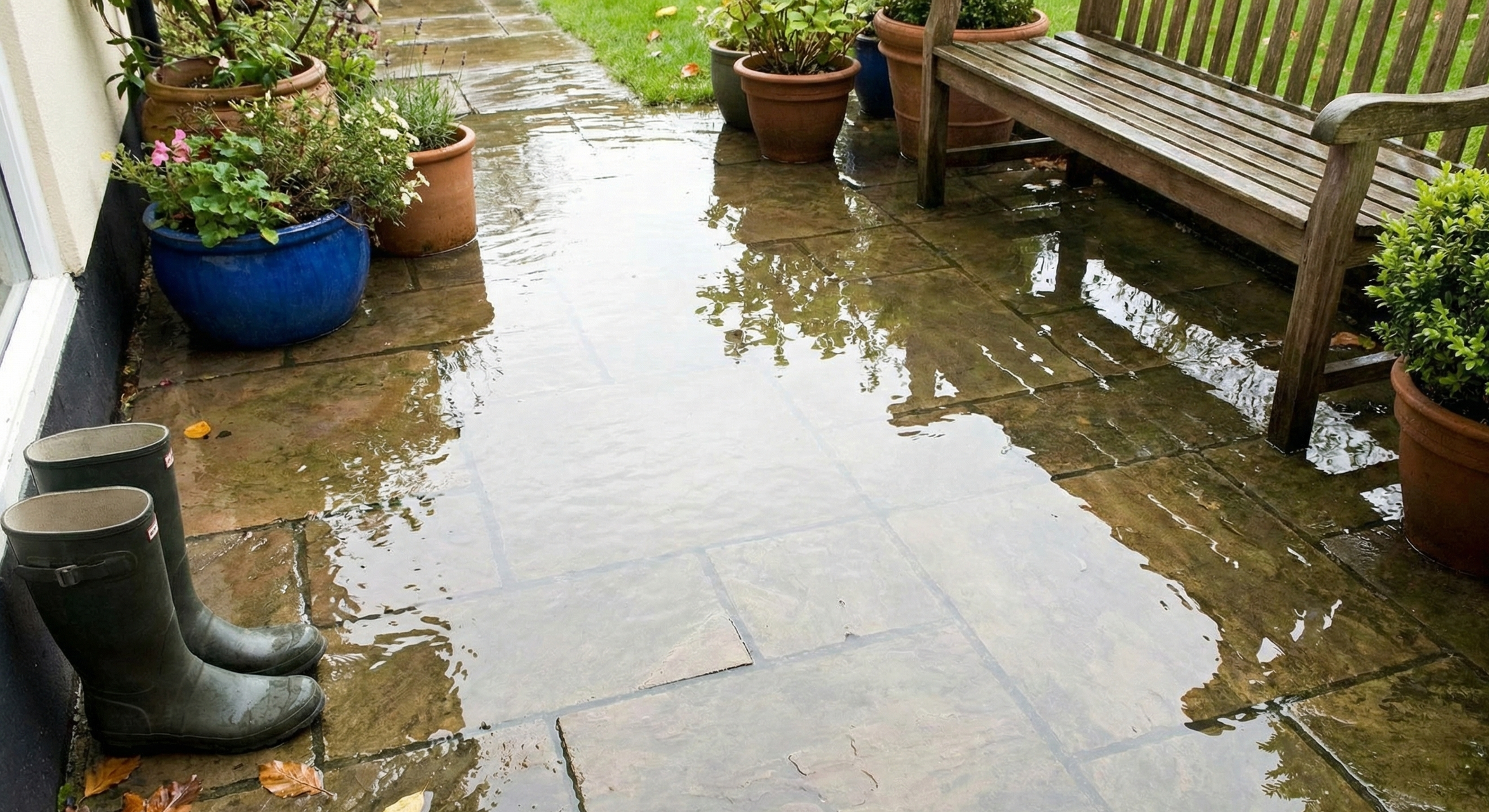
Is standing water ruining your plans for an outdoor living space?
Many Union County homeowners watch their yards turn into a muddy mess after heavy rain. This is not just a cosmetic issue. Persistent standing water lowers property value, damages lawns, undermines patios and walkways, and creates long-term moisture risks for crawlspaces and foundations.
At Viro Builders, we see this problem daily. Before we design patios, outdoor kitchens, or fire features, we evaluate how water moves across your property. In Union County, drainage issues are rarely accidental. They are predictable, and when addressed correctly, they are permanent fixes.
The Root Cause: Union County Soil and Geography
The biggest reason backyards flood in Union County is the soil itself.
Much of the county sits on dense, clay-rich soil. Unlike sandy soils that drain quickly, clay resists water absorption and holds moisture at the surface.
What this means for your yard:
Rain falls faster than the soil can absorb it.
Water spreads sideways instead of downward.
Low areas become collection points after storms.
The “bathtub effect” is common here. Shallow topsoil sitting over compacted clay traps water with nowhere to escape.
Bottom line: Drainage solutions that work in other regions often fail in Union County unless they are specifically designed for clay soil.
Why Poor Drainage Becomes an Expensive Problem
Standing water is not something to ignore or “live with.” Over time, poor drainage causes real damage.
Lawn and Landscape Damage
Dead grass and muddy patches
Washed-out mulch and planting beds
Soil erosion that worsens every storm
Hardscape and Structural Failure
Sinking or uneven pavers
Cracked concrete from sub-base movement
Retaining walls losing stability
Foundation and Crawlspace Risks
Water pushing toward the foundation
Increased crawlspace humidity
Mold, mildew, and long-term structural concerns
If water is not controlled intentionally, it will always find the weakest point on your property.
Stormwater Regulations in Union County
Stormwater runoff is regulated to protect local streams and downstream properties.
Many Union County municipalities, including Indian Trail, operate under Stormwater Phase II standards, which govern how water flows from private property into public systems. Newer developments are built with stricter drainage requirements, but older homes often lack modern stormwater infrastructure.
At the state level, the North Carolina Department of Environmental Quality (NC DEQ) establishes minimum stormwater management standards. However, “minimum compliant” does not always mean effective during heavy rain events. This is why many existing homes flood even though they technically meet code.
As a licensed builder, Viro Builders evaluates drainage with both performance and compliance in mind, ensuring solutions work in real-world storm conditions, not just on paper.
The Viro Builders Drainage-First Approach
We do not treat drainage as an afterthought. Every outdoor living project we build in Union County starts with understanding how water behaves on the site.
1. Strategic Surface Grading
Proper grading is the foundation of effective drainage.
Positive drainage directs water away from the home and outdoor living areas.
Swales guide runoff naturally without creating unsightly trenches.
Low areas are reshaped to eliminate pooling.
In many cases, correcting grading alone dramatically improves yard conditions.
2. Subsurface Drainage Systems
When surface solutions are not enough, we manage water below grade.
French drains intercept groundwater and relieve saturated soil.
Trench drains capture fast-moving surface water near patios or driveways.
Downspout piping moves roof runoff safely away from foundations and hardscapes.
These systems are engineered to work with clay soil, not against it.
3. Permeable and Water-Smart Design
Outdoor living projects increase impermeable surfaces. Without planning, this makes drainage worse. Our solution:
Permeable pavers that allow water to pass through.
Engineered base layers that manage subsurface flow.
Designs that reduce runoff instead of concentrating it.
This approach protects your investment long-term.
Why Drainage Is Critical for Outdoor Living Spaces
If you are planning a patio, outdoor kitchen, or fire feature, drainage must be addressed first.
The Viro Builders promise:
Drainage is integrated from day one.
Fire pit areas remain usable after storms.
Retaining walls and hardscapes last.
Fixing drainage after installation is disruptive and often costs twice as much.
To learn more about how we design outdoor spaces correctly from the ground up:
Frequently Asked Questions
Is backyard flooding the same as being in a floodplain? No. Floodplains are related to rising rivers and creeks. Backyard flooding is usually caused by rain not draining properly due to clay soil, grading, or runoff patterns.
Will planting grass solve my drainage issue? No. Grass helps prevent erosion but cannot fix clay soil or poor grading. Standing water will eventually kill most turf.
Do I need a permit to fix drainage in Union County? It depends on the scope of work. Stormwater impacts are overseen by Union County Building Code Enforcement. Viro Builders handles regulatory evaluation as part of our process.
Ready to Reclaim Your Yard?
Union County clay does not have to dictate how you use your property. Whether you need to correct existing flooding or prepare your site for a new outdoor living space, the solution starts with proper drainage design.
[Contact Viro Builders Today] – Schedule a site consultation and let us engineer your yard the right way from the ground up.
